Fair Lending Risk Assessment: Process and Key Steps in 2026
.png)
Accelerate AML Compliance: Meet Regulatory Demands with 80% Less Setup Time
Imagine you’re applying for a loan, and you don’t get it only because you’re from a certain race, or nationality, that would be so unfair, that’s why there are federal fair lending laws, the Equal Credit Opportunity Act and the Fair Housing Act. These laws prohibit discrimination in credit transactions.
In fact, the fair lending process begins at the start of any marketing campaign, not just at the final decision of granting or denying the loan. This process applies to all loans regardless of their type! Hence, every financial institution or credit union must conduct fair lending risk assessments to avoid huge compliance penalties and fines.
As the name indicates, Fair Lending ensures that all individuals, regardless of their race, color, nationality, or gender, have equal access to lending opportunities. This, in fact, is one of the hot topics nowadays as regulatory institutions promote financial inclusion. So, to uphold fair lending and eliminate any discriminatory outcome, financial institutions must conduct fair lending risk assessments.
Overview of a Fair Lending Risk Assessment
Any financial institution conducts risk assessments, during which the process includes identifying, evaluating, managing, and monitoring potential risks that can negatively impact the institution's ability to achieve its objectives and goals. This assessment can be conducted to assess the risk of loss due to a borrower's failure to repay a loan, or it could be the risk of loss resulting from inadequate or failed internal processes.
Now fair lending risk assessment also identifies, evaluates, manages, and monitors potential risks but it ensures that the financial institution complies with fair lending laws and regulations to eliminate any discriminatory practices in lending. So for example, the team or person concerned analyzes loan data to identify if there are any patterns that might suggest discriminatory practices based on gender.
So we can say that general risk assessment covers a broad range of risks like credit risk, operational risk, and market risk among others, while fair assessment risk is specifically focused on compliance with fair lending laws. They might overlap and non-compliance with fair lending laws can lead to significant legal, financial, and reputational risks. Thus, a comprehensive and effective risk assessment framework will, by default, include a fair lending risk assessment.
Key Components of Fair Lending Risk Assessment
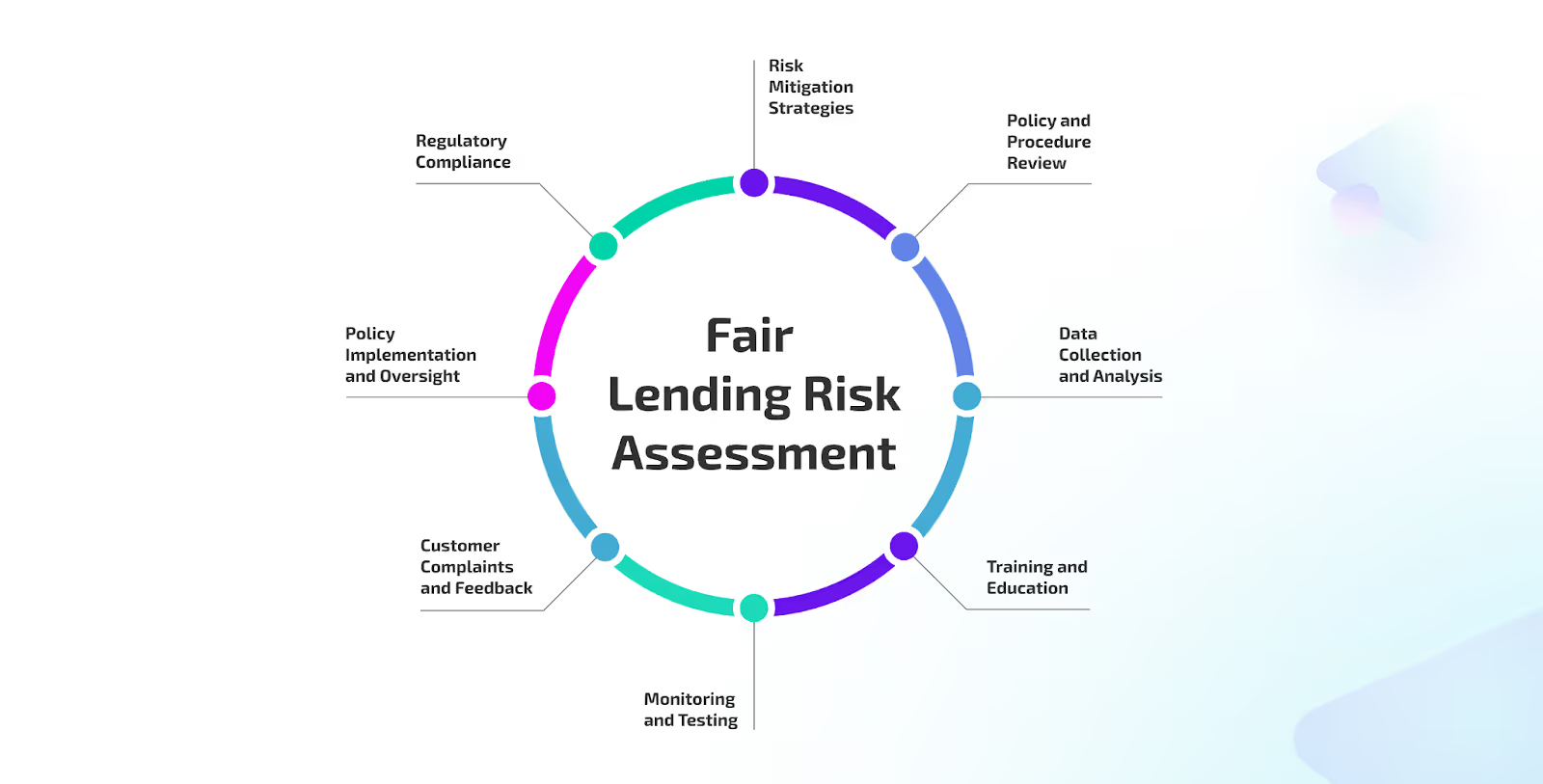
Let’s assume that X Bank is a mid-sized financial institution that lends people money. As part of X bank's commitment to ensuring fair lending practices, their compliance team reviews the bank's lending policies and procedures to align with relative laws and regulations such as the Equal Credit Opportunity Act (ECOA) and the Fair Housing Act (FHA). So, after the review process, the team identified that the policy requiring a minimum loan amount may disproportionately affect minor communities and that they need to adjust and make the policy more inclusive.
Another example would be when X bank analyzes loan approval data to identify potential disparities. So the bank collects data on loan applications, denials, approvals, pricing, and terms, to analyze for patterns indicating discrimination. If the analysis reveals any kind of discrimination, the findings shall prompt further investigation.
- Policy and Procedure Review
- Data Collection and Analysis
- Training and Education
- Monitoring and Testing
- Customer Complaints and Feedback
- Policy Implementation and Oversight
- Regulatory Compliance
- Risk Mitigation Strategies
Read more: The 6 Best Financial Risk Management Software in 2026
Key Areas of Fair Lending Risk
Primary fair banking risks are the dangers financial institutions might encounter when trying to follow laws that prevent unfair lending practices. These risks can come from different parts of how a bank works and the key risks include treating people unfairly based on their race or other protected characteristics, charging different prices for loans without a good reason, and refusing loans in certain neighborhoods.
1. Compliance Management Program Risk
2. Redlining Risk
3. Marketing Risk
4. Steering Risk
5. Underwriting Risk
6. Pricing Risk
7. Servicing Risk
Comply quickly with local/global regulations with 80% less setup time
How Does a Fair Lending Risk Assessment Work?

First thing first, the assessment starts with evaluating the different types of risks inherent in the operations of the institution, namely, inherent risk, controls, and residual risk.
1. Inherent Risk
This is where it all begins, the raw, unfiltered risk inherent in every lending decision before any protection measure is put in place. You would want to consider the institution's diverse business lines, the types of products offered, and where it operates, these are the factors that you need to look at as they need careful navigation.
2. Controls
Controls are the tools and strategies that include everything from detailed policies and procedures to systems and regular training sessions. These are the essential elements that turn a risky leap into a calculated, safe descent.
3. Residual Risk
Even with the best preparation, some risk always lingers, that's what we call residual risk. It's the manageable level of uncertainty left after all precautions are taken. Effective controls should ideally reduce the initial high-risk scenario to a more comfortable and acceptable level, to finally comply with laws and regulations.
The Fair Lending Risk Assessment Process
- Data Collection and Analysis: Here's where the financial institution gathers all the data like loan applications, approvals, denials, pricing details, you name it. Statistical tools like regression analysis enable spotting any patterns or disparities that could hint at potential biases.
- Policy and Procedure Review: Are your policies following relevant laws and regulations? Is lending fair and consistent across different customer demographics? You need to ask yourself these questions and then answer them carefully and clearly!
- Training and Education: Each and every team member involved in the lending process needs to be on the same page when it comes to fair lending laws and compliance responsibilities.
- Monitoring and Testing: The institution conducts internal audits and tests. Are procedures being followed correctly? Are there any discrepancies in how customers are treated?
- Reporting and Documentation: Documenting everything from policies to audit results is not just paperwork, it's a trail of evidence that proves compliance and readiness for any regulatory examination.
- Regulatory Interaction & Risk Mitigation: Finally, engage with regulators to show how the process was conducted. This is about transparency, responding to inquiries, participating in examinations, and addressing any issues found are all part of ensuring the journey meets regulatory standards. It is also about making plans to fix issues, changing policies to be fairer, training staff on the new rules, and regularly checking and reporting on how things are going.
Read more: AML Risks in Correspondent Banking: A Comprehensive Overview
Factors Affecting Fair Lending Risk
When you understand the factors that affect the fair banking risk assessment process, you will be able to proactively manage and reduce the associated risks.
1. Internal Factors Affecting Fair Lending Risk
- Organizational Culture and Values
- Staff Training and Awareness
- Internal Policies and Procedures
- Data Management Practices
- Compliance Monitoring and Auditing
2. External Factors Affecting Fair Lending Risk
- Regulatory Changes
- Economic Conditions
- Technological Advancements
- Market Competition
- Community and Advocacy Group Pressure
10 Primary Questions for a Fair Lending Risk Evaluation
These questions cover critical aspects of fair lending risk assessment, they serve as your starting point. However, more questions should be asked before, during, and after the evaluation:
- Are lending practices consistent with fair lending laws?
- Are lending policies and procedures clearly documented and communicated?
- Are there disparities in loan approval rates among different demographic groups?
- Is statistical analysis used to detect any disparities in lending patterns based on race, ethnicity, gender, or other protected characteristics?
- Are comprehensive data sets collected on loan applications, approvals, denials, pricing, and terms?
- How are loan products marketed and advertised?
- What measures are in place to ensure compliance with fair lending regulations?
- How are complaints and grievances handled?
- How frequently is training provided, and how is its effectiveness monitored?
- How are data insights used to improve lending practices and ensure fairness?
What Actions Should You Take if Risks Are Identified?

Concerning fair lending risks, various prevention measures can be implemented, but it is crucial to identify the existence of risk factors in the first place.
First, you need to incorporate a comprehensive risk management plan as a strategic resource to address unique findings. This plan should describe corrective actions and how, when, and to what extent, the necessary changes in the loan approach, or coverage of equality will take place.
The training and education of employees who participate in the lending processes are among the recommended actions to strengthen compliance with fair lending legislation and raise awareness of best practices among all staff.
It is most effective to assess policies and procedures regularly in relation to the existing legislation and internal evaluations. They require constant assessment of the lending activities and policies so that risks arising in the course of the practice are detected and corrected as early as possible.
Interaction with regulators and other stakeholders through providing reports and updates of overall conformity with the fair lending practices proves compliance intentions and aids in building trust in the specific regulatory setting. All these actions enhance an institution’s capacity to manage fair lending risks and promote the right ethical standards in lending.
Software Solutions for Fair Lending Risk Assessments
FOCAL enables financial institutions to enhance fair lending risk assessments through AI-driven analytics and real-time data processing. By leveraging configurable risk models and affordability scoring, FOCAL helps institutions evaluate customer profiles objectively and make consistent, data-driven lending decisions. The platform promotes transparency with explainable risk insights, allowing teams to understand scoring factors and maintain compliance with regulatory standards. With advanced analytics and continuous monitoring, FOCAL also helps identify potential risk patterns across customer segments, supporting proactive and fair decision-making across the lending lifecycle.
Conclusion
In conclusion, fair lending risk assessment plays the function of an effective filter against discrimination on the basis of inherent characteristics, like race or skin color, for instance. Maintaining the principle of avoiding bias guarantees that some persons are not favored or discriminated against concerning the use of financial services.
Therefore, with proper utilization of assessment frameworks and support from intelligent technologies, financial institutions should aim to achieve fairness in the lending processes. This commitment also complies with regulations and increases trust and engagement with people of various backgrounds. In the end, the enforcement of equal credit opportunity is the requirement to ensure that all people, without discrimination or preference based on their color, race, nationality, or other aspects, have fair access to credit.




.jpg)
.jpg)
.jpg)